By Ryan Fair
Late season whitetail hunting is a grind. The rut is long gone, daylight movement is limited, and deer are in full survival mode. By the time winter settles in, most bucks have lost 20–25 percent of their body weight, food sources are scarce, and cold temperatures demand more calories just to stay alive. This is where supplemental feeding stops being a luxury and starts becoming a critical management tool.
I’ve watched it play out year after year. When natural forage disappears and snow or cold locks down browse, deer shift hard to the most reliable and easiest calories they can find. If you can provide those calories in the right form and in the right location you can not only help deer recover from the rut, but also dramatically improve late-season daylight activity.
Late Season Is All About Calories
During the late season, deer aren’t traveling for curiosity or breeding they’re moving with purpose. Every step cost them valuable energy. That means they gravitate to food sources that provide them with high energy, are easily digestible, and packed with essential minerals.
Corn alone might keep deer coming back, but it doesn’t check all the boxes. Deer coming off the rut need protein, fats, minerals, and trace elements to rebuild muscle, strengthen immune systems, and prepare for harsh winter conditions. This is where targeted supplemental feeding shines.
Why Minerals Still Matter in Winter
A common misconception is that minerals are only important in spring and summer. While it’s true mineral consumption peaks during antler growth and lactation, deer still crave minerals in winter especially sodium and trace minerals that support digestion and overall health.
This is where Redmond Hunting products have become a staple on all our Working Class Hunter properties. Redmond’s natural mineral offerings, including their mineral blocks and loose mineral blends, are sourced from ancient sea salt deposits and contain a broad spectrum of trace minerals that deer instinctively seek out. Unlike overly processed blocks, Redmond minerals are clean, natural, and something deer readily consume even in colder months.
Placing Redmond mineral sites near late-season feeding areas creates a one-two punch: calories paired with nutrients that help deer actually utilize the food they’re eating. I’ve consistently seen deer linger longer at these sites, especially mature bucks that don’t waste movement this time of year.

Rakk Fuel: Built for the Grind of Winter
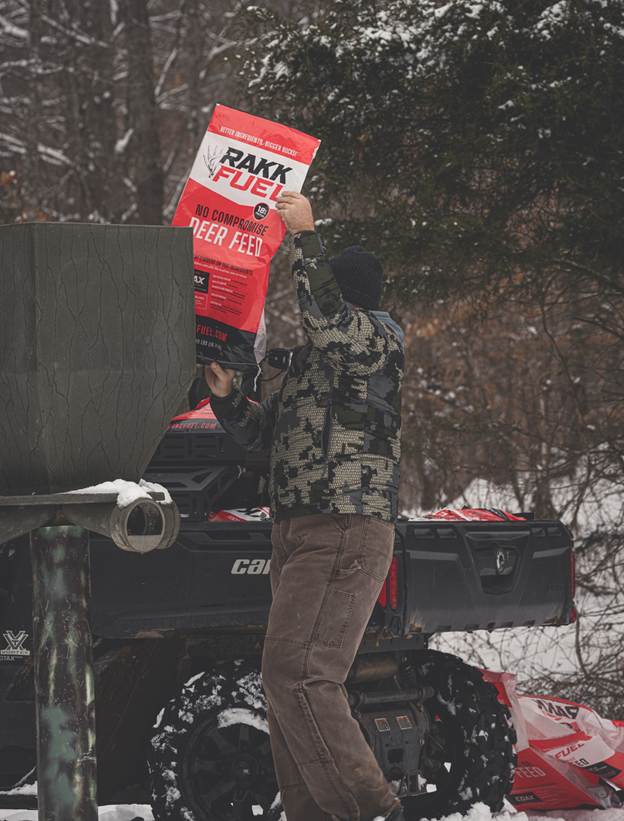
When it comes to straight-up late-season nutrition, Rakk Fuel has earned a permanent spot in our feeding program. Rakk Fuel is designed specifically for high-stress periods with winter being at the top of that list. Its high-fat, high-protein formulation delivers the kind of energy deer need when temperatures drop, and natural food sources are limited. The fat content is especially important, as fat provides more than double the energy of carbohydrates or protein.
What really stands out with Rakk Fuel is consistency. Deer don’t just sample it, they commit to it. Once they find it, they work it into their daily routine. That predictability is gold for late-season hunting when daylight movement is often tied directly to food access.
We like to run Rakk Fuel in gravity feeders positioned just inside cover, close to bedding but far enough away to allow deer to stage before stepping out. Pairing those feeders with Redmond mineral nearby keeps deer in the area longer and encourages repeat visits.

Strategic Placement Is Everything
Supplemental feeding isn’t just about dumping product on the ground. Location matters, maybe even more in late season than any other time of year. Focus on south-facing slopes, thermal cover, and areas protected from prevailing winds. Deer want to feed where they feel secure and can conserve energy. When you place Rakk Fuel and Redmond minerals in these locations, you’re creating a hub deer can rely on when conditions are toughest.
Trail cameras over these sites tell the story quickly. For this reason, we like to hang our Tactacam cell cameras up to collect valuable intel. You’ll quickly see stressed bucks reappear, body conditions improve, and movement patterns tighten up. That information alone is worth the effort.
Ethical, Effective, and Impactful
Supplemental feeding isn’t about baiting deer it’s about supporting the herd during the most difficult time of year. When done responsibly and legally, it improves herd health, helps bucks recover from the rut, and increases overall winter survival, especially in harsh climates.
Products like Redmond Hunting minerals and Rakk Fuel aren’t gimmicks. They’re tools. Tools that, when used correctly, make a real difference on the ground. Late season is where preparation meets payoff. If you’re willing to put in the work when conditions are brutal, supplemental feeding can turn a dead period into one of the most rewarding times of the year both for hunting success and long-term herd health.